แสดงบทความที่มีป้ายกำกับ canon แสดงบทความทั้งหมด

วันพุธที่ 5 ธันวาคม พ.ศ. 2555

canon powershot s100 elph

Canon PowerShot S100 12.1 MP Digital Camera with 5x Wide-Angle Optical Image Stabilized Zoom (Black)

It's easy to enjoy and share the videos you shoot with the PowerShot S100. Simply connect its HDMI terminal to your HDTV using an HDMI cable. And because the PowerShot S100 supports HDMI-CEC technology, youíll be able to control the playback of your images and videos on any CEC-enabled HDTV using the TVís remote control. (CEC ñ Consumer Electronic Control ñ is part of the HDMI specification, enabling components in a system to communicate with one another.)


 The PowerShot S100 digital camera is equipped with Global Positioning System (GPS)* technology. Now Canon PowerShot S100 at Amazon.comyou can travel the world and let the camera automatically record the locations and local times of your stills and videos. The camera can also use the GPS unit to automatically set the exact time. You can maximize the usefulness of the GPS feature by using the special bundled Map Utility software that makes it fun to share the memories of your world adventures. In addition to displaying all your photos’ locations on a world map, the camera’s GPS system can also track your route from photo to photo – a great way to visualize each trip! You can also create and share custom maps and personal mini-travel guides with friends and family members.


PROS:
* The s100 is cleaner at high ISO (eg 1600 and above) but the difference isn't as substantial as Canon claims (for low ISO, there is no difference in noise)
* s100 is even slimmer than the s95 which is was already quite pocketable
* GPS is a great addition and quite accurate most of the time
* rough texture finish makes the camera easier to hold and also looks great
* rubber grips make camera easier to hold but don't expect miracles
* mirror like shutter button is easier to find especially given the removal of the func button from the top of the camera
* back wheel now has the perfect resistance and feedback
* the delete button is not on the dial so I can finally delete while viewing a zoomed in on an image!!!
* lens zooms very quickly (sometimes too quickly to get accurate zoom)
* fast shutter speed (in fact in Continuous drive mode it is very difficult to take one photo--always get two photos and I am fairly fast releasing the shutter button--an additional slower Continuous mode option would have been helpful)
* 8 shots in a second is a handy feature to have though not often used (limited to 8 shots and then have to wait for the photos to be written to the card)
* 24mm wide-angle is very useful for indoor photography
* lens is sharper across zoom range than the s90--with sharper corners (people have reported variation in the sharpness of the lens on early models)
* ability to control max ISO and ISO selection criteria for Auto ISO
* dynamic range correction works well
* dedicated movie recording button
* 1080p video recording (much better resolution but not as good low light capture than s90&s95 but can't match Sony HX-9V)
* can zoom while recording video with minimal noise 


Canon PowerShot S100 12.1 MP Digital Camera with 5x Wide-Angle Optical Image Stabilized Zoom (Black)

วันเสาร์ที่ 23 กรกฎาคม พ.ศ. 2554

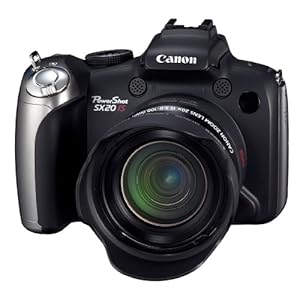
Canon PowerShot SX20IS Reviews

Canon PowerShot SX20IS 12.1MP Digital Camera with 20x Wide Angle Optical Image Stabilized Zoom and 2.5-inch Articulating LCD

Canon PowerShot SX20IS 12.1MP Digital Camera with 20x Wide Angle Optical Image Stabilized Zoom and 2.5-inch Articulating LCD


  • High-powered 20x wide-angle optical zoom with Optical Image Stabilizer


  • Capture 720p HD movies with stereo sound; HDMI output connector for easy playback on your HDTV


  • 2.5-inch Vari-Angle System LCD; improved Smart AUTO intelligently selects from 22 predefined shooting situations


  • DIGIC 4 Image Processor; 12.1-megapixel resolution for poster-size, photo-quality prints


  • Powered by AA batteries (included); capture images to SD/SDHC memory cards (not included)


  • more details


  • I shoot all kinds of stuff with all kinds of cameras. I am a working photographer who shoots for advertising and corporate client as well as to make images for my own books about photography. Over the last two years I've been using small cameras like the Canon G10 and the SX10 for more and more of my work. In the studio, shooting set up shots or small products these cameras shine by dint of their easy to use Live View and increased depth of field. When I bought the SX 10 it was for the long range of the zoom lens which meant I could shoot anything from a construction site to tight shots of the cabins at the top of the construction cranes. I've done some portraits with studio lights and an SX10 and they were also very usable. I wish the SX 10 and SX 20 had raw file capability but they don't. That just means I have to be a bit more careful about WB and exposure. I've used the SX10 at outdoor swim meets and found that the lens performs better than expected right out to the end.

    So, why the SX 20? Recently I've been asked to do more and more little video snippets for clients and for my publisher and while I like the results from the SX10 I wanted real HD video for the times that a medical practice has asked for video clips for both their website AND for power point and other uses. I wanted the extra detail for the times that they use the clips in projected presentations. The price point works.

    I've spent a couple days testing the SX 10 and the results are very, very good. The front mounted microphones are of very high quality and the sound for most applications is very acceptable. Would I like a mike input? You bet! Does that sour the deal? Not in the least.

    The image quality of the stills is just as good as the SX 10 at low ISO's and about 1/2 a stop better at 200 and 400. I'll chalk that up to the new digic processor.

    All in all the build quality and the easy operation make the camera a winner for me. These days clients are more interested in using images and video in a wide range of multimedia and the SX 20 is a great tool for anything that's headed to the web. I still own traditional DLSR cameras and use them but left to my own devices I find the smaller sensor cameras to be highly competent and very usable.

    With an SX20 and a G10 I feel like I can handle just about anything except shots that call for narrow depth of field. Traditional photographers may not want to hear that video is becoming a required skill but that won't make it go away. This camera is a cost effective way to get your feet wet, find your way around and get your feet wet. I like it.

    PowerShot SX20 IS Highlights
    20x wide-angle optical zoom with Optical Image Stabilizer
    Use the optical zoom while shooting superb 720p HD movies with stereo sound
    Improved Smart AUTO intelligently selects the proper settings
    Shooting Modes
    DIGIC 4 Image Processor
    iSAPS Technology
    Large 2.5-inch Vari-Angle LCD enables easy viewing
    This AA battery powered camera enables you to easily power up
    Canon PowerShot SX20 highlights

    Get buy Canon PowerShot SX20IS for special price click here

    Digital Camera Store
    Best reviews cameara digital

    วันพุธที่ 11 พฤษภาคม พ.ศ. 2554

    canon rebel xs reviews-springs deals

    Canon Rebel XS 10.1MP Digital SLR Camera with EF-S 18-55mm f/3.5-5.6 IS Lens
    Canon Rebel XS 10.1MP Digital SLR Camera with EF-S 18-55mm f/3.5-5.6 IS Lens (Black)

    REVIEWS FROM COSTOMER
    The new Rebel, which replaces the XTi as the baby of its dSLR line, retains the 10-megapixel CMOS and 2.5-inch LCD, while moving up to the body of the more recent XSi. However, it also uses the newer Digic III processing chip--albeit with 12-bit processing rather than the XSi's 14-bit--so we expect to see some differences in photo quality, especially at higher ISO sensitivities, compared with the XTi. And the XS will ship with the image stabilized version of the EF-S 18-55mm lens; the XTi currently ships with the non-IS lens. The camera also adds Live View mode and, according to Canon, will have improved battery life.
    Canon Rebel XS 10.1MP Digital SLR Camera with EF-S 18-55mm f/3.5-5.6 IS Lens 
    Like other Canon entry-level dSLRs, the XS will be available in black or silver, and each in a body-only or kit version. The EOS Rebel XS is slated to ship a bit earlier overseas than it is here, and Canon hasn't quite finalized pricing. It should be in the same ballpark as the XTi is now, though. In conjunction with the XS announcement, Canon is also rolling out a new version of its lightweight flash unit, the Speedlite 430EX II. It's designed to work in conjunction with the newer models for displaying flash data on the camera screen, moves the physical master/slave switch into the menus, and now sports a metal foot rather than plastic. The flash will ship at the same time as the camera, and be priced $329.99, the same as its predecessor did at launch.
    Canon EOS Rebel XS highlights


    10.1-megapixel CMOS sensor
    Stuff I disagree with from the "reviews" : 1- "The camera feels cheaply built"....simply wrong, nothing is shabby, buttons are actually easy to press, doesn't have cheap clicks to them, the lens mount has a secure feel to it, and a proper snap when it is set. Battery compartment is certainly secure. Your finger must intricately open the door for entry, won't be an accident issue. Rubber door at a.v. ports snap in well. Rubber grip is firm enough, smooth enough to not irritate your hands.
    2- " XS is "overpriced" compared to the XSi.....Xsi shoots slower than the XS, XSi picture quality is equal to the XS even though the XSi is 12 MP. The XSi may be the 3" LCD and a few other upgrades, but these upgrades don't add up when the picture is taken and the quality of both cameras match alike. I may have chosen the XSI if I wanted to spend the extra $150. u.s but for the lesser price, I'm yet to regret.
    3- "The XS "only has a 2.5" LCD compared to a couple of it's rivals having 3" LCD's". I can see every thing clearly with this screen, even with Histograms, and grids onscreen. If LCD's get much bigger then canon may need to install a tv tuner as well....the 2.5" is more than sufficient.
    4- "The XS doesn't have SPOT METERING compared to the XSi, so this is a big issue"- haven't encountered a reason to complain yet, after 500 night shots and 200 day shots.
    Canon EOS Rebel XS highlightsCanon EOS Rebel XS highlights
    THE DOWN SIDE: the EOS software for uploading the photos to computer, and remote controlling the cam via computer is AWFUL. It's a task to upload, as it is beach balling when you hit "upload". Digital professional software is non responsive. I have not been able to use the software past the install point. Mac version here. Better use i-photo and photoshop. 
    Get Buy for $479.00

    วันอาทิตย์ที่ 8 พฤษภาคม พ.ศ. 2554

    Canon t3i review


    Canon EOS Rebel T3i 18 MP CMOS Digital SLR Camera and DIGIC 4 Imaging with EF-S 18-55mm f/3.5-5.6 IS Lens

    REVIEW FROM USER
    The good: The Canon EOS Rebel T3i delivers excellent video capabilities and image and video quality.

    The bad: If you shoot both still and video, the T3i's controls can be frustrating to operate, and it's not terribly fast for burst shooting sports, kids, or pets.

    The bottom line: For the money, the Canon EOS Rebel T3i is a great choice for dSLR videographers--though the cheaper T2i can still suffice if you don't need the articulated LCD--and it's a solid choice for creative still shooters. But though the image quality and general shooting performance are top-notch, if you're upgrading to capture sports, kids, or pets, the T3i may not be able to keep up.

    If you didn't think the 60D was overpriced when it shipped, you will now. The Canon EOS Rebel T3i (aka the EOS 600D), the 60D's younger and cheaper sibling, offers the same basic camera with some corners cut--most notably a slightly less well-constructed body and a (purposely?) stunted burst shooting speed. You can also think of it as a slightly more expensive T2i, with the addition of an articulated LCD and a few features for the auto-always crowd. Either way, the T3i remains a solid if unexciting follow-up to its predecessor, although one that seems to cater more to videophiles than still shooters.

    That's not to say it compromises on still photo quality. Overall, the T3i has an excellent noise profile, unsurprisingly similar to that of the 60D's. JPEGs look very clean up through ISO 400, and even at ISO 800 you really have to scrutinize to see the beginnings of detail degradation; at ISO 1,600 the noise becomes more obvious but still isn't too bad.

    Canon EOS Rebel T3i 18 MP CMOS Digital SLR Camera and DIGIC 4 Imaging with EF-S 18-55mm f/3.5-5.6 IS LensCanon EOS Rebel T3i 18 MP CMOS Digital SLR Camera and DIGIC 4 Imaging with EF-S 18-55mm f/3.5-5.6 IS LensCanon EOS Rebel T3i 18 MP CMOS Digital SLR Camera and DIGIC 4 Imaging with EF-S 18-55mm f/3.5-5.6 IS Lens
    Canon EOS Rebel T3i photo samples
    ISO 400 is sort of my tipping-point sensitivity; to shoot action outdoors, I generally have to bump up the setting to at least ISO 400 in order to reach a sufficiently fast shutter speed. And because few consumer cameras are fast enough at shooting burst raw+JPEG, the in-camera JPEG processing has to be decent as well. The T3i fared pretty well under these conditions. Overall, I consider shots at this setting good enough to use, but I still wish I would have been able to shoot raw to clean them up.
    Canon's JPEG processing remains very good. Even at ISO 1,600 I couldn't obtain unambiguously better results processing the raw--Canon seems to optimize for exposure at the expense of sharpness, and I couldn't get sharper results without losing some shadow detail (you may do better). At ISO 3,200 I was able to achieve a significant reduction in color noise without losing too much shadow detail. And by ISO 6,400, I started to see hot pixels as a side-effect of the in-camera noise reduction (those white spots) in the JPEGs.
    On all other counts the photos looked good on the default settings, though my favored setting with Canon models is Neutral with sharpening bumped up a few notches. Colors look both relatively accurate and saturated; metering and exposures are consistent and predictable; and the dynamic range is broad enough to allow a reasonable amount of highlight and shadow recovery.
    As usual, the video looks very good. There's some moiré, but not a lot of rolling shutter, and moving edges look surprisingly sharp. At its highest quality, it seems to deliver an average bit rate of roughly 45Mbps. It offers the same great set of frame rates and manual exposure controls as the 60D, including highlight tone priority for fine-tuning high-key exposures. Though the built-in microphone is mono, it sounds surprisingly good, and there's a wind filter along with the same 64-level sound controls. Canon also incorporates the Video Snapshot feature from its camcorders--it lets you snap up to 8-second clips--and some in-camera special-effects filters, too.